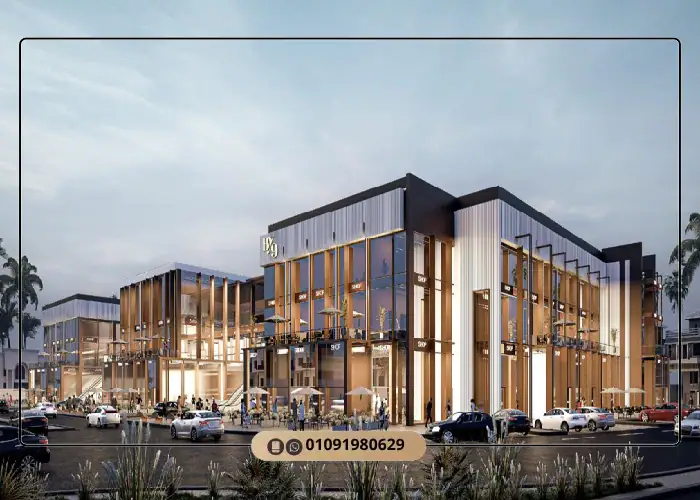
Pharmacy units are among the most stable commercial assets in the Egyptian market, because they serve a daily, non-seasonal need that holds up well against swings in discretionary spending. Real Estate Capsule currently lists 13 projects offering pharmacy units across New Cairo, 6th of October, Sheikh Zayed and Obour City, with sizes from 15 m² to 54 m² and prices from EGP 1,575,000 up to EGP 9,376,000.
Why a pharmacy is sold as a distinct unit
In most modern Egyptian malls the developer designates exactly one unit for pharmaceutical activity and contractually prohibits a second. That exclusivity is the core of the unit’s value: you are not buying floor area, you are buying uncontested access to the pharmaceutical demand generated by everyone who lives in or visits the project.
This is precisely why the price per metre on a pharmacy unit typically exceeds the average for retail shops in the same building, even though the pharmacy is usually the smaller unit.
Contact us now to see available pharmacy units before they are reserved
What the ideal pharmacy unit looks like
| Element |
Benchmark |
| Floor |
Ground floor only, with direct frontage onto pedestrian or vehicle flow |
| Size |
15 to 60 m² is enough for a full pharmacy with a small store room |
| Frontage |
The wider the glazed frontage, the higher the operating value |
| Proximity to clinics |
A clinic floor above is the single strongest success factor |
| Activity exclusivity |
Must appear in writing in the contract, never verbally |
Projects offering pharmacy units on Real Estate Capsule
Three questions that decide the investment
1. Is the pharmaceutical activity contractually exclusive?
This is the first question, not the price. If exclusivity is not written into the contract, nothing prevents the developer from selling another unit to a competing pharmacy in the same building — at which point the unit loses much of its operating value.
2. What is the actual resident population around the project?
A pharmacy runs on residents, not passing visitors. A project surrounded by already-occupied buildings trades from day one; a mall in a district whose units have not been handed over may take years to reach viable turnover.
3. Is there medical activity in the same building?
Clinics, a laboratory or a radiology centre in the project multiply pharmacy traffic, because a large share of prescriptions is filled in the same building immediately after the consultation.
Frequently asked questions
Do I need a pharmacist licence to buy the unit?
No — buying property requires no professional licence. Operating a pharmacy does require authorisation from the relevant authorities and supervision by a registered pharmacist, which is why many investors buy the unit and lease it to a pharmacist or to a pharmacy chain.
How does a pharmacy unit differ in price from a regular shop?
The price per metre is usually higher, because the unit carries activity exclusivity and a prime ground-floor position, and because demand from expanding pharmacy chains in the new cities is strong.
Can a regular retail unit be converted into a pharmacy?
Physically it is usually straightforward, but contractually it depends on the project’s regulations. Many developments explicitly prohibit it in order to protect the owner of the exclusive pharmacy unit.
Get the current list of available pharmacy units and updated prices